
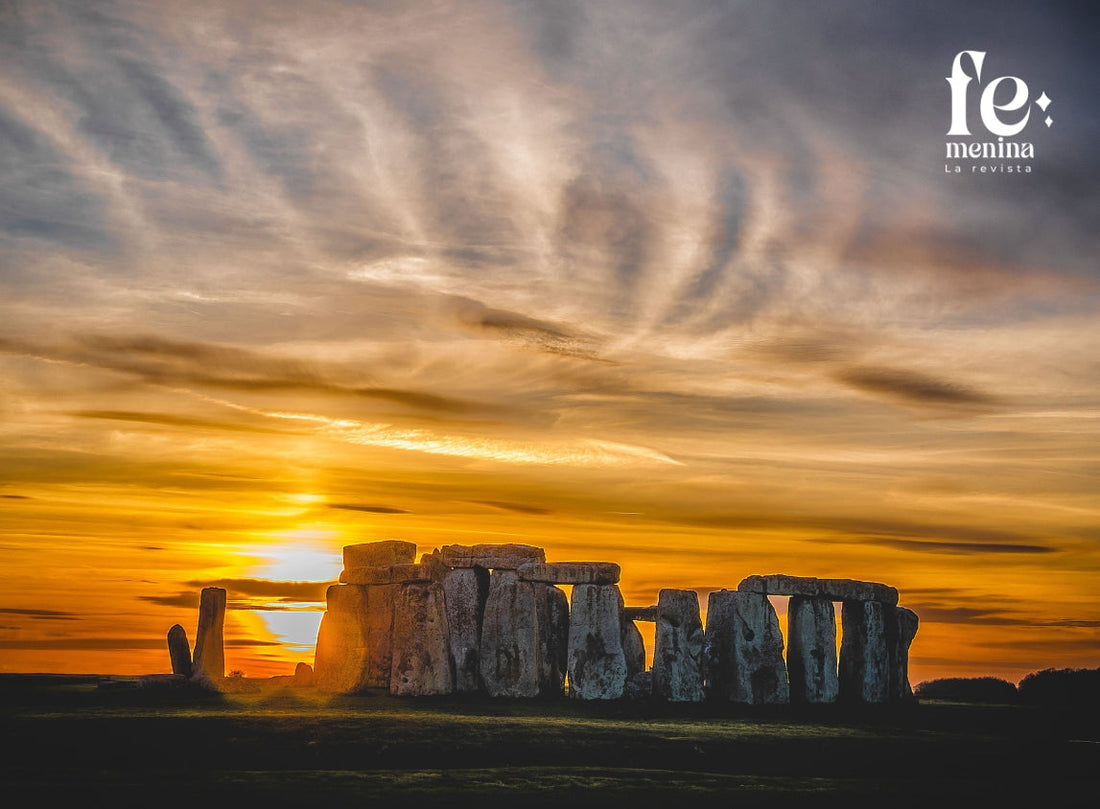
Rujm el-Hiri: The forgotten 'Stonehenge' of the Middle East
In the vast plains of the Golan Heights, a mysterious ancient monument known as Rujm el-Hiri stands silently, guarding secrets that defy time. This enigmatic site, often compared to Stonehenge, is one of the most fascinating and least-known megalithic structures in the Middle East. Its name, meaning "Wildcat's Stone Heap" in Arabic, evokes the mystique surrounding it, while in Hebrew it is called Gilgal Refaim , "The Wheel of the Giants," further fueling the legends that surround it.
The mysterious design
Rujm el-Hiri is composed of five concentric rings of stones, with a central mound reaching a height of 7 meters. From the air, the monument has an impressive design reminiscent of an astronomical clock or a ceremonial calendar. The stones, some of which weigh several tons, were placed with a precision that suggests an intention beyond the purely functional.
The total diameter of the site exceeds 150 meters, and although its appearance may seem chaotic at first glance, the arrangement of the stones suggests an advanced knowledge of geometry and astronomy on the part of its builders.
Who built it and why?
The lack of clear historical records has left archaeologists with more questions than answers. Rujm el-Hiri is estimated to have been built more than 5,000 years ago, placing it in the same era as the Egyptian pyramids and Stonehenge. However, unlike these more famous monuments, the Golan site has not received the same attention nor has it been fully excavated.
Some theories suggest it may have been a ceremonial or burial site, while others point to its use as an astronomical observatory. The fact that the summer solstice aligns perfectly with the central mound reinforces the idea that the ancient inhabitants of the region had a deep understanding of celestial movements.
Legends and mysticism
Local legends attribute the construction of Rujm el-Hiri to the Rephaim, a race of giants mentioned in biblical texts. According to these stories, the giants possessed superhuman strength and built the monument as a place of power. Although these stories are considered mythological, their persistence over the centuries adds an aura of mystery to the site.
The forgotten 'Stonehenge'
Despite its historical and cultural significance, Rujm el-Hiri remains unknown to many, overshadowed by other, more popular monuments. However, for those who do visit, the site possesses an almost otherworldly atmosphere, a reminder that there is still much to discover about the ancient civilizations that inhabited this region.
The enigma of Rujm el-Hiri invites us to reflect on the ingenuity of our ancestors and on how many secrets still lie hidden beneath the sands of time. Was it a place of worship, an observatory, or something else entirely? Perhaps we will never know for sure, but its mystery is precisely what makes it so captivating.
"For the hidden things belong to the Lord our God, but the things revealed belong to us and to our children forever." — Deuteronomy 29:29
Exploring the past is always a reminder that humanity, throughout its history, has looked to the heavens for answers. Rujm el-Hiri remains an echo of that quest, an enigma that challenges us to look beyond the obvious.


Excelente informacion. Dios les bendiga 🇸🇻